The facts that do not fit the theory are the most important
Death on the NileThe facts that do not fit the theory are the most important is the investigative principle that turns contradiction into a clue. For Hercule Poirot, an explanation is not sound merely because it accounts for the obvious evidence: a detail that resists the theory may expose a false assumption and require the investigation to begin again.
Meaning and Method
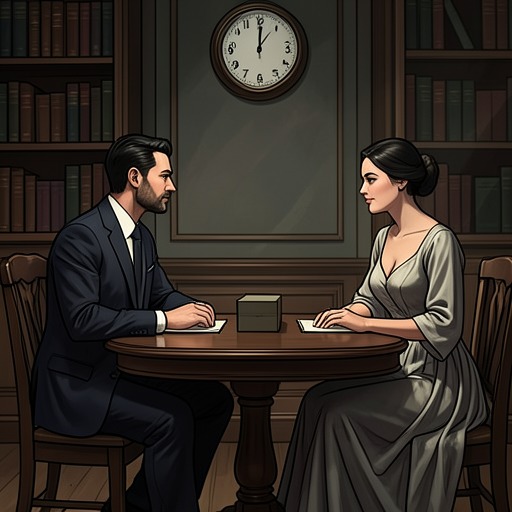
Poirot states the principle while discussing the removal of Jacqueline de Bellefort’s pistol from the scene of Linnet Doyle’s murder. The apparent framing of Jacqueline seemed straightforward: the pistol had been taken from the saloon after the quarrel, used to kill Linnet, and associated with a blood-written J. But the weapon was then thrown overboard. If the killer meant to direct suspicion toward Jacqueline, discarding the most incriminating object seemed to work against that purpose. Poirot insists that this is not a minor oddity to be explained away. The sequence itself does not make sense under the current account, so something in that account must be wrong.
The method demands revision rather than rescue of a preferred theory. Colonel Race recognizes that detective work often involves wiping out false starts and beginning again; Poirot agrees, adding that investigators can go astray when they force every fact to fit a theory and set aside whatever does not. The principle therefore describes a practical discipline: attend to the stubborn detail, test what the existing explanation assumes, and be willing to change the explanation when it fails.
Contradictions in the Investigation
The apparent alibi of Jacqueline provides another test of what the evidence can and cannot establish. Cornelia Robson, Jim Fanthorp, and Jacqueline were in the saloon after Linnet left, and Fanthorp places his eventual arrival at his cabin at about half-past twelve. Poirot concludes that Jacqueline could not have shot Linnet before roughly twenty past twelve. When Cornelia went to fetch Miss Bowers, Fanthorp remained with Jacqueline in her cabin, giving her a strong alibi for that interval. Yet Fanthorp’s account of the evening also complicates the assumption that Simon Doyle feared Jacqueline might attack Linnet: he believed Simon was concerned that Jacqueline might harm herself after the earlier shooting of Simon and her subsequent remorse. Testimony can establish a limit or redirect an interpretation without, by itself, resolving the murder.
The pistol’s disappearance remains the sharper contradiction. Poirot initially assumes the crime happened spontaneously, by someone who had seized the chance to exploit suspicion of Jacqueline. Under that account, the killer would have needed to overhear the quarrel and obtain the pistol after the others left the saloon. But the removal of the weapon does not sit comfortably with a simple attempt to frame her. Rather than treating the discarded pistol as an incidental detail, Poirot later recognizes that his starting assumption about the crime’s timing and preparation has distorted the whole case.
Revising the Case
The reinterpretation changes the murder from an opportunistic act into a planned and precisely timed one. Poirot concludes that his own wine bottle was drugged so he would be asleep and unable to take part in the night’s events. Because he drank wine while Mrs. Allerton drank water and Tim Allerton drank whisky and soda, the different drinks offered a practical distinction; the bottles also stood on the tables during the day. Poirot had initially dismissed the possibility that he had been drugged, attributing his heavy sleep to the heat and unusual tiredness. In retrospect, that dismissal was another way an inconvenient fact had been made to fit an easy explanation.
The same insistence on testing apparent certainties governs Poirot’s assessment of the other evidence. Simon Doyle appeared to have been accounted for in the saloon until the quarrel and then was physically unable to leave after being shot in the leg. Cornelia Robson, Jim Fanthorp, and Jacqueline could testify to the first part of that account; Dr. Bessner and Miss Bowers could speak to Simon’s condition afterward. Poirot also considers the surgical knife used to kill Louise Bourget, which points toward Dr. Bessner but cannot settle the question: Bessner had himself drawn attention to the fact. The evidence must be weighed against the circumstances and the competing explanations, not converted into a verdict by its surface appearance.
A further mismatch shifts attention back to Simon. Louise’s ambiguous appeal, Poirot reasons, was unlikely to have been meant for Dr. Bessner, because she could have spoken privately with the doctor. Simon, wounded and constantly attended in the doctor’s cabin, might not offer another opportunity. That detail changes the force of her words and the direction of the inquiry. In a separate line of questioning, Poirot interprets Marie Van Schuyler’s account cautiously: she had seen Rosalie Otterbourne, but he thinks she had been peering out before trying to steal the pearls, not listening to what happened in Linnet’s cabin. Rosalie, he concludes, had been throwing overboard her mother’s hidden cache of drink. Each interpretation depends on distinctions among what a witness saw, what she heard, and what she was doing.
Significance in the Mystery
The principle gives the investigation a structure of correction. The conspicuous clues—the J, Jacqueline’s pistol, and the apparent opportunities created by the quarrel—encourage an initially coherent account. Poirot’s decisive progress comes instead from noticing where that account fails: why the weapon was removed, why he slept so heavily, and what the witnesses’ statements actually establish. The investigation advances not by accumulating clues without discrimination, but by allowing a contradiction to overturn the assumptions that made those clues seem conclusive.
The expression also marks the difference between a plausible story and an explanation that accounts for the evidence as a whole. Once Poirot rejects the idea of a spontaneous murder, the apparently disconnected details—the drugged wine, the discarded pistol, the timing, and the testimony surrounding Simon—can be reconsidered within a different account of the crime. The facts that resist the theory become important precisely because they reveal where the theory must change.